

Living in Fullerton
Fullerton is in north Orange County, about 25 miles southeast of downtown Los Angeles. It is in Orange County, not Los Angeles County, although its northwest corner meets La Mirada, which is across the county line. George and Edward Amerige bought 430 acres here and laid out the townsite in 1887 beside the new Santa Fe rail line. The city incorporated in 1904. It is named for George H. Fullerton, who ran the railroad's land company.
Harbor Boulevard is the north-south spine. It runs through downtown, where it crosses Commonwealth Avenue and the railroad. South of the tracks and along the 91 the land is flat and the streets form a grid. North of downtown the ground rises into the Coyote Hills and the streets start to curve. The West Coyote Hills, about 510 acres in the northwest, are still mostly open land. The 57 runs up the east side past Cal State Fullerton, and Fullerton Municipal Airport sits in the southwest corner near the 5 and the 91.
The city touches La Habra and Brea on the north, Placentia on the east, Anaheim on the south and Buena Park on the west. Cal State Fullerton, Fullerton College, Hope International University and Marshall B. Ketchum University are all here. Street addresses use four ZIP codes: 92831, 92832, 92833 and 92835.
Homes and property types in Fullerton
Fullerton has a wider spread of home ages than most of its neighbors. The oldest houses are around downtown. Barranca has California bungalows from the first two decades of the 1900s. The streets named Jacaranda, Malvern and Brookdale hold the largest intact group of 1920s houses in the city. Golden Hill was subdivided in the early 1920s with Spanish Colonial houses and cottages, then filled in during the 1940s and 1950s after building stopped in 1929.
Most of the flatland was built after World War II. The postwar tracts buyers ask about most are the three sold as Fullerton Groves between 1953 and 1957, mid-century modern houses built by Pardee-Phillips from plans that architects Jones and Emmons had drawn for Joseph Eichler. On the north side, the old Bastanchury Ranch became Sunny Hills. The Sunny Hills Ranch Company was formed in 1935 to sell the land, and ranch-style houses went up there from the 1950s into the 1970s.
The newest large community is Amerige Heights, built in the early 2000s on the former Hughes Aircraft site in the west hills. It mixes single-family houses, townhomes and condominiums, and all of it sits inside a homeowners association. Condominiums and townhomes elsewhere in the city each have their own association, so ask Tony to pull the documents for the exact complex.
Age tells you what to inspect. A 1920s house near downtown is usually on a raised foundation, so the inspector should look at foundation bolting, the chimney, old wiring and galvanized or cast-iron pipe. A 1950s tract house is usually on a slab, with drain lines under the concrete that are worth a sewer camera. The mid-century modern houses have low-slope roofs and large panes of glass. On hillside lots in Sunny Hills, drainage and retaining walls matter as much as the house.
Fullerton neighborhoods and tracts
Fullerton recognizes 16 residential historic districts, and ten of them carry a Residential Preservation Zone. In those zones the city allows additions, new construction and accessory dwelling units, but the work goes through design review and has to fit the traditional character of the street. The city's own page says the zones do not allow the two-unit lot split that state law permits elsewhere. The city adopted a Mills Act program in 2020 for qualifying historic homes.
The names below are the ones you will see on listings and on the city's maps. Boundaries of historic districts are exact, and the city publishes them. Names such as Sunny Hills are used more loosely, so ask Tony to confirm which tract, zone and school boundary a specific address falls in.
- Downtown and SOCO
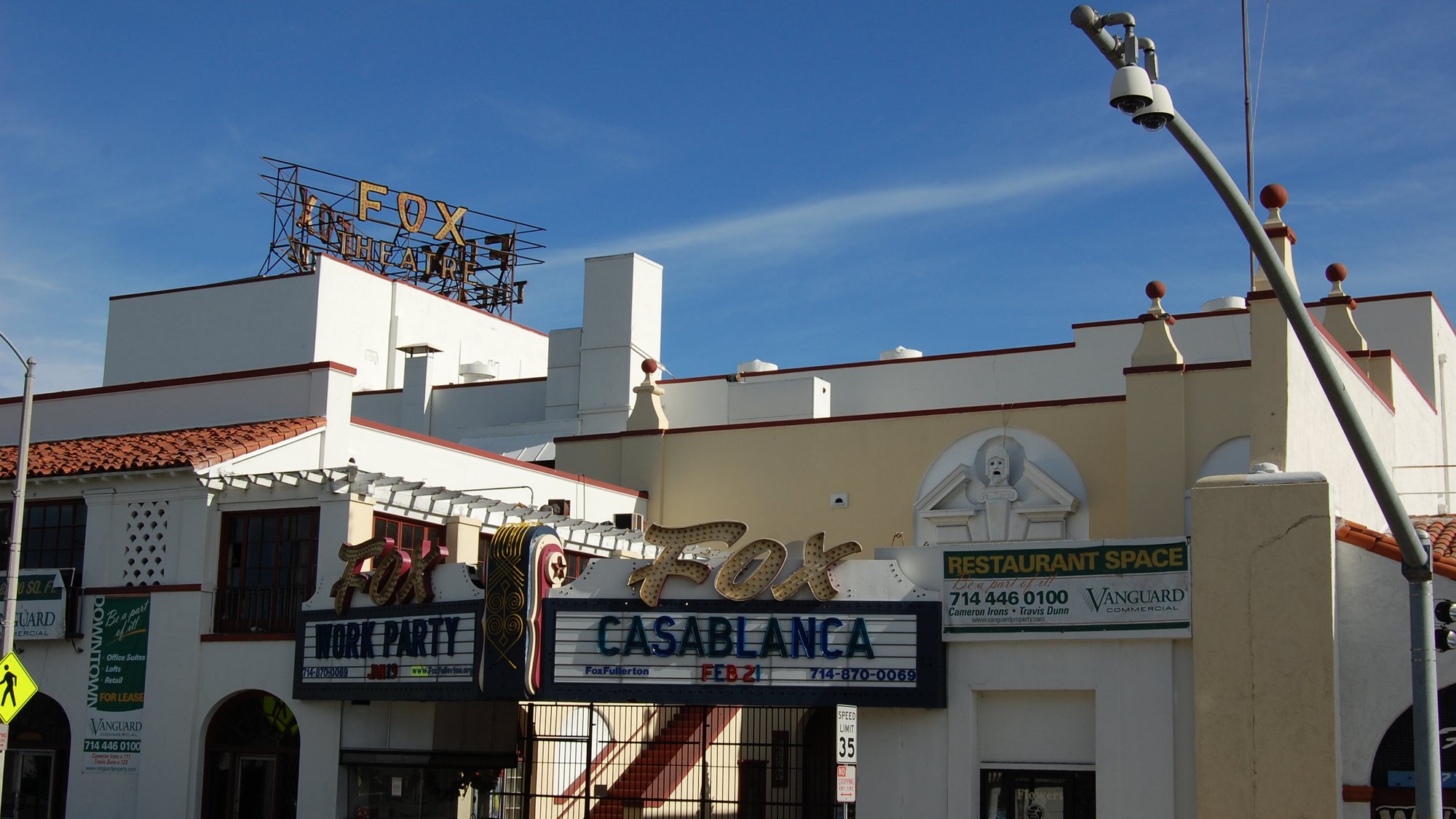
- The blocks around Harbor Boulevard and Commonwealth Avenue, with the 1925 Fox Theatre and the 1930 Santa Fe depot. SOCO is the part south of Commonwealth, beside the train station.
- Jacaranda, Malvern and Brookdale
- West of downtown. The largest intact group of 1920s houses in Fullerton. Owners asked for a Residential Preservation Zone and the city applied it in 1997.
- Barranca
- The 100 blocks of East Brookdale Place, Union Avenue and Glenwood Avenue, between Harbor Boulevard and Brea Creek. California bungalows from the first two decades of the 1900s. A city-recognized historic district.
- Golden Hill
- Upper and Lower Golden Hill, including the 600 blocks of North Richman, Golden and Drake avenues. Subdivided in the early 1920s. In 2025 the city held a meeting on a possible preservation zone for Lower Golden Hill.
- Skyline Park
- A late 1920s subdivision of 114 lots bounded roughly by Skyline Drive, Cannon Lane, North Lemon Street and Sheppard Drive. The city held a preservation zone meeting for it in March 2025.
- Fullerton Groves
- West of Richman Avenue and south of Valencia Drive, on streets such as Adams, Ash, Elm and Maplewood. Mid-century modern tracts sold from 1953 to 1957 and often called Eichlers.
- Sunny Hills
- The hills on the north side, once the Bastanchury Ranch. Ranch-style houses on larger lots from the 1950s through the 1970s. Sunny Hills High School is on Warburton Way.
- Amerige Heights
- Former Hughes Aircraft land off Malvern Avenue, with its main entrance at Hughes Drive. Built in the early 2000s. Houses, townhomes and condos under the Amerige Heights Community Association, with Fisler School inside it.
Schools and district boundaries
Most Fullerton addresses are in two districts. The Fullerton School District runs the elementary schools, which are kindergarten through sixth grade, three junior highs for seventh and eighth grade, and two schools, Beechwood and Fisler, that go from transitional kindergarten through eighth. High schools belong to the Fullerton Joint Union High School District. Its three comprehensive campuses in the city are Fullerton Union, Sunny Hills and Troy.
The lines do not follow the city limits. Six districts serve some part of Fullerton. Parts of the west and northwest edges are in the Buena Park or La Habra City elementary districts, which also feed the Fullerton Joint Union high schools. Part of east Fullerton, around Topaz Elementary on Topaz Lane, is in Placentia-Yorba Linda Unified, where the middle and high schools are in Placentia. A small area is in Brea Olinda Unified.
The Fullerton School District has an address lookup on its website, and it says the results are preliminary until the school confirms them. The high school district also takes applications for programs such as Troy Tech from outside a school's attendance area. Before you write an offer, give Tony the address and confirm the assigned schools with the district itself.
- Fullerton School District
- Transitional kindergarten through eighth grade. Fifteen elementary schools, two TK to 8 schools and three junior highs. It also takes in small parts of La Habra, Brea and Buena Park.
- Fullerton Joint Union High School District
- Grades 9 to 12. Founded in 1893. Fed by the Fullerton, Buena Park, La Habra City and Lowell Joint elementary districts. Six comprehensive high schools, three of them in Fullerton.
- Fullerton Union High School
- Grades 9 to 12, on East Chapman Avenue by downtown. Founded in 1893 and the oldest school in the district. Home to an Agri-Science Academy and an Academy of the Arts.
- Sunny Hills High School
- Grades 9 to 12, on Warburton Way in the north hills. Affiliated with the International Baccalaureate organization since 1985 and offers the IB diploma program.
- Troy High School
- Grades 9 to 12, on East Dorothy Lane near Cal State Fullerton. Home of Troy Tech, a four-year magnet program founded in 1986, and an International Baccalaureate diploma program.
- Beechwood School and Fisler School
- The district's two TK to 8 campuses. Beechwood is on Beechwood Avenue in the north hills. Fisler is on Starbuck Street inside Amerige Heights.
- Ladera Vista, Nicolas and Parks junior highs
- Grades 7 and 8. Ladera Vista is on East Wilshire Avenue, Nicolas on West Olive Avenue and Parks on Rosecrans Avenue. The elementary school attended decides which one follows.
- Topaz Elementary School
- Transitional kindergarten through sixth grade, on Topaz Lane in east Fullerton. It belongs to Placentia-Yorba Linda Unified, not the Fullerton School District, and its students move on to schools in Placentia.
What it costs to own here beyond the price
Under Proposition 13, a California home is reassessed at its purchase price when it sells, and the taxable value can then rise only a small, capped amount each year. A buyer in Fullerton should not use the seller's tax bill as a guide. A house held for decades carries a far lower assessed value than yours will, and the county sends a supplemental bill after closing.
Most of Fullerton was built before Mello-Roos districts existed, so most tax bills here carry none. Amerige Heights is the exception. The Fullerton School District formed Community Facilities District No. 2001-1 there, and the city has its own Community Facilities District No. 2 covering part of the community, whose bonds the city council voted to refinance in 2024. Amerige Heights homes also pay association dues. Ask Tony to pull the actual tax bill and the HOA budget for the address.
Fullerton runs its own water system through the Public Works Department, and the city's Utility Services Division bills water, sewer and trash together. Trash and recycling are collected by Republic Services under a city contract. Electricity is Southern California Edison and natural gas is Southern California Gas. The owner is responsible for the sewer lateral from the house to the main, which is one more reason to scope the line on an older home.
The city adopted the state's updated Fire Hazard Severity Zone maps on May 6, 2025. They place Moderate, High and Very High zones in and around the West and East Coyote Hills, so parts of north Fullerton are mapped and most of the flatland is not. If an address is in a zone, ask for an insurance quote early. Homes near the airport, the rail line and the freeways also come with noise that belongs in your own visit.
Parks, shopping and things to do
Downtown runs along Harbor Boulevard on both sides of Commonwealth Avenue, with restaurants, the Fox Theatre and the train station within a few blocks of each other. The hills north of downtown hold most of the large parks. A recreational trail known as the Fullerton Loop, roughly 11 miles around, ties several of them together for walkers, cyclists and horseback riders.
For shopping, Amerige Heights has its own town center on Malvern Avenue, and the Harbor Boulevard and Orangethorpe Avenue corridors carry the larger stores. Cal State Fullerton and Fullerton College both put on public performances and games through the school year, and the university campus also holds the public arboretum.
- Hillcrest Park
- 37.8 acres on North Harbor Boulevard, opened in 1922 and the oldest park in the city. It has a restored 1930s fountain, a duck pond and a long wooden staircase.
- Laguna Lake Park
- A city park in the north hills built around a lake with a walking path, next to an equestrian center and on the route of the Fullerton Loop.
- Craig Regional Park
- A 124-acre county park on State College Boulevard at the Fullerton and Brea line, with a lake, picnic areas and sports fields.
- Fullerton Arboretum
- A 26-acre botanical garden on the Cal State Fullerton campus that opened in 1979.
- Muckenthaler Cultural Center
- A 1924 house on 8.5 acres on Malvern Avenue, now a city-owned arts center with exhibits, classes and outdoor performances.
Getting around and commuting
Three freeways serve Fullerton. The 91 crosses the south side, the 57 runs up the east side and the 5 clips the southwest corner by the airport. Imperial Highway, State Route 90, runs along the north edge, and Beach Boulevard, State Route 39, runs down the west edge. Eastbound on the 91, the 91 Express Lanes begin at the 55 and run to the 15 in Corona. They require a FasTrak transponder.
The Fullerton Transportation Center is downtown at 120 East Santa Fe Avenue. Metrolink's Orange County Line and 91/Perris Valley Line stop there, along with Amtrak's Pacific Surfliner and Southwest Chief. Trains run direct to Los Angeles, Riverside, Irvine and San Diego. OC Bus routes stop at the station and run the main boulevards.
In a straight line from the station, Disneyland is about 4 miles south, John Wayne Airport about 14 miles, the Huntington Beach Pier about 16 miles and Los Angeles International Airport about 28 miles. Road miles are longer. Fullerton Municipal Airport, at the southwest corner on Commonwealth Avenue, is a city-owned general aviation field that opened in 1927.
Buying and selling in Fullerton
Tony Ayoub is a REALTOR and a licensed mortgage loan originator (NMLS ID 2359276). He has held a California real estate license since 2007 and speaks fluently in English and Arabic. These are the things to check in Fullerton, and Tony can go through each one with you.
Before you buy
- Confirm the school districts for the address before you offer. Six districts serve parts of Fullerton, and the lines on the east and west edges do not follow the city limit.
- Check the city's preservation zone map if the house is near downtown. In a Residential Preservation Zone, exterior changes, additions and accessory dwelling units go through design review, and the state's two-unit lot split is not allowed.
- Pull the actual property tax bill for any Amerige Heights address and read the special assessment lines. Community facilities districts cover parts of the community, in addition to the association dues.
- Look up the address on the Fire Hazard Severity Zone map the city adopted in May 2025 if the home is near the West or East Coyote Hills, and get an insurance quote before you remove contingencies.
- Order a sewer camera inspection on any house built before the 1970s. The owner is responsible for the line from the house to the city main, and older clay or cast-iron pipe is common.
- Visit homes near Fullerton Municipal Airport, the rail line and the 91, 57 and 5 at different times of day. Ask Tony to check the address against the county's airport land use plan.
- Ask Tony to go through what you may be able to borrow before you tour. He is a licensed mortgage loan originator (NMLS ID 2359276), and you may use any lender you choose.
- Know the short-term rental rules before you count on rental income. Fullerton requires a permit, and in July 2025 the city put a moratorium on new short-term rental permits.
Before you sell
- Gather permits for additions, garage conversions and patio enclosures before listing. Buyers of 1920s and 1950s houses in Fullerton ask for them, and the city's Building Division keeps the permit history by address.
- State the preservation zone or historic district status in the listing if the home is in one, and have any past design review approvals ready. Buyers will ask what they are allowed to change.
- Check whether the home has a Mills Act contract with the city. A contract is recorded against the property and passes to the buyer, so it must be disclosed and explained.
- Order the natural hazard disclosure report early. It shows whether the parcel is in a Fire Hazard Severity Zone under the maps the city adopted in 2025, which sellers must disclose.
- Have the HOA resale package and the current tax bill ready in Amerige Heights. Buyers there compare association dues and community facilities district charges house by house.
- Name the assigned school district accurately in the listing. An east Fullerton address in Placentia-Yorba Linda Unified or a west side address in the Buena Park district should say so.


